
A Deeper Experience of Time: How Breathwork Can Change Our Experience of Time

“The time is out of joint.”
— William Shakespeare, Hamlet
There is a quiet ache many of us carry these days: the feeling that there is simply not enough time.
Not enough time to care for ourselves well. Not enough time for meaningful connection, rest, creativity, movement, or the practices that help us feel most alive. Even the things we value most can begin to feel compressed beneath the accumulating demands of life.
Work, caregiving, logistics, finances, dishes, appointments, planning, responding, remembering. The invisible labor of being human gathers quietly around us. So easily, we can move through our days with the persistent feeling of trying to catch up — perpetually behind, perpetually orienting toward what comes next.
And yet there is something curious about our collective relationship with time.
We live amidst countless technologies designed to save it. We optimize, automate, organize, and accelerate. The modern world promises efficiency at every turn, yet many people report feeling more rushed and time-starved than ever before. Somehow, despite all our efforts to master time, many of us feel mastered by it.
What if what we are longing for is not actually more time?
What if what we are longing for is more spaciousness within time?
Many years ago, while reading one of José Luis Stevens' books on shamanic journeying, I came across a practice intended to expand one's experience of time. Of all the exercises in the book, that one stayed with me.
I had already known moments when time seemed to soften—experiences in nature, meditation, breathwork, and deep presence where the usual movement of the clock felt less relevant. The idea that we might consciously cultivate a different relationship with time continued to return to me.
Because time, subjectively speaking, does not always feel the same.
We all know days that pass so quickly we can barely account for them. We become absorbed in work, responsibilities, distractions, and routines, only to realize the day is already gone.
And we know the opposite experience as well. An afternoon that feels remarkably spacious. Hours spent with someone we enjoy that seem to pass in an instant, yet somehow feel full and rich when we look back on them. Moments that seem larger than the amount of time they actually occupied.
The clock continues moving at the same pace, but our experience of time changes.
The ancient Greeks understood something important about this distinction. They spoke of at least two dimensions of time.
There was chronos, chronological and sequential time. The measurable movement of moments into hours, days, and years. Time as duration. Time as sequence. The unfolding of one thing after another.
And there was kairos, a different order of time altogether. Not measured by quantity, but by quality. Sacred time. Ripened time. The opportune moment. Moments when something meaningful opens and ordinary chronology becomes secondary.
While modern life is largely organized around chronos—schedules, deadlines, calendars, and productivity—many of our most meaningful experiences belong more fully to kairos.
Most of us know this intuitively. We have all experienced moments that seem to carry a different quality of time, moments that feel fuller, deeper, and somehow less rushed than ordinary life.
Mythologist Michael Meade often speaks of kairos as those moments when life deepens, when something larger interrupts the momentum of daily life and invites us to listen more closely. Not necessarily dramatic moments, but moments of depth: times when we feel more alive, more connected, and more fully present to our lives.
How the Brain Experiences Time
Science increasingly suggests that time is not experienced as a fixed, objective stream. While clocks measure chronology, the brain experiences time more subjectively—through attention, memory, emotion, novelty, and the state of the nervous system.
In The Secret Pulse of Time, Stefan Klein explores how the brain does not simply register time like a mechanical clock. Our experience of time is shaped by the quality of our awareness. When attention is fragmented, rushed, or overloaded, days often seem to collapse into one another. We move quickly, accomplish much, and yet somehow feel we were never fully there.
One of the clearest examples of this is novelty. Childhood summers often felt endless not because time moved differently, but because the brain was busy encoding newness. Everything felt vivid, surprising, worthy of attention. As adults, repetition compresses experience. Familiar routines blur memory, and without realizing it, days begin to pass in shorthand.
If novelty can stretch our experience of time, immersive attention appears capable of doing something similar.
Flow states offer a glimpse into this mystery. Athletes, artists, musicians, writers, meditators, and even surgeons often describe becoming so absorbed in an activity that ordinary awareness of time begins to soften. Hours pass unnoticed. Or a brief period feels strangely spacious and full. Self-consciousness quiets. Attention deepens.
Researchers have proposed several explanations for why this may occur. Brain imaging studies of meditation, flow states, and related practices often show reduced activity in parts of the Default Mode Network, the network associated with self-referential thinking, mind-wandering, and the continual narration of past and future. Some researchers have also suggested that flow states may involve periods of transient hypofrontality, a temporary reduction in activity within certain executive regions of the prefrontal cortex.
While the science remains incomplete, these shifts may help explain why our ordinary sense of self, effort, and time can soften during states of deep absorption. Instead of remaining absorbed in planning, evaluating, remembering, and anticipating, awareness becomes more rooted in direct experience.
Practices like meditation and breathwork may support this transition by anchoring attention in sensation, breath, sound, feeling, and presence. The moment can begin to feel fuller, less fragmented, and more spacious.
Breathwork may be particularly effective because it combines several factors known to influence temporal perception: sustained attention, heightened interoceptive awareness, changes in autonomic state, increased sensory vividness, and a temporary reduction in ordinary self-referential thinking. Together, these shifts may help create the sense of spaciousness, absorption, and presence that many people report during practice.
Philosopher James K.A. Smith, in How to Inhabit Time, suggests that perhaps the challenge is not simply learning to manage time more efficiently, but learning to dwell within it more fully—to inhabit our lives rather than perpetually rushing through them.
Perhaps this is part of what practices like meditation, breathwork, time in nature, and moments of awe make possible.
Not more time, but a different relationship with time.
A little less hurried.
A little less fragmented.
More spacious.
More fully alive to the moments we are already living.
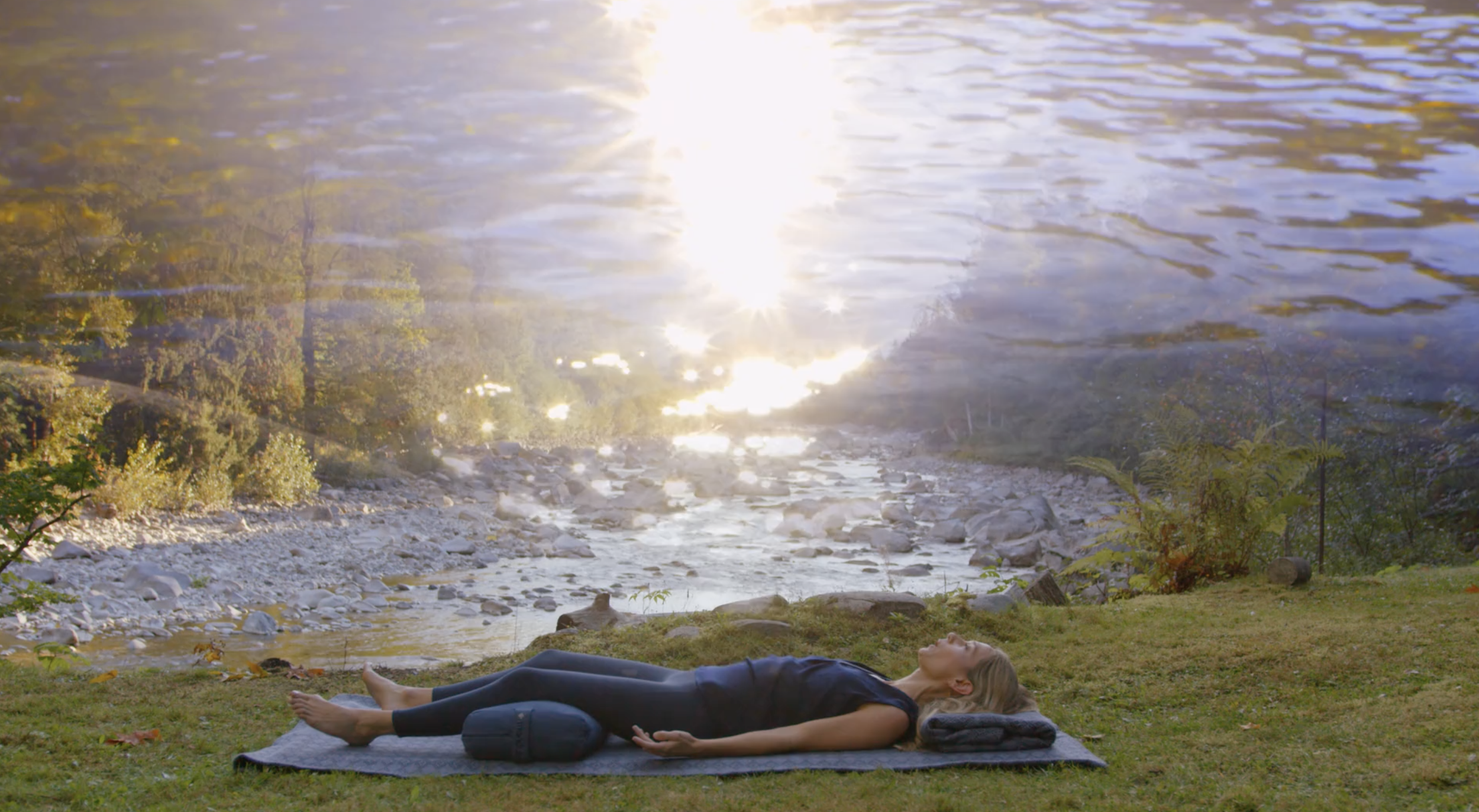
Breathwork and Deep Time
Breathwork offers another doorway into this mystery.
In my work facilitating breathwork sessions, I cannot tell you how many times people emerge and ask, often with genuine surprise, "How long has it been?"
The answer almost always catches them off guard. Seventy minutes somehow felt like twenty. Sometimes people report losing any sense of time altogether.
The clock has not changed, of course. Yet something about the experience of time often feels markedly different. Attention gathers. The usual momentum of daily life softens. People frequently describe a sense of spaciousness, clarity, or connection that feels difficult to access in ordinary awareness.
This may be part of why contemplative and expanded-state practices can feel so restorative. It is not simply that they offer rest, although rest matters. They create conditions in which more of our experience becomes available to us.
People sometimes describe deep breathwork, meditation retreats, or psychedelic experiences as feeling like "twenty years of therapy in one session." While such statements may be exaggerated, they often point toward something meaningful.
More can unfold than our ordinary pace of awareness typically allows. Insights emerge. Emotions surface. Memories reconnect. Perspectives shift.
Five days spent in deep meditation can feel remarkably different from five days spent moving through ordinary routines. The clock measures the same duration, yet the experience of time can feel vastly different.
Perhaps what changes is not time itself, but the density of experience within time.
In ordinary awareness, much of life passes unnoticed. In contemplative, breathwork, and psychedelic states, awareness can become more spacious, more vivid, and more permeable. It is as though additional dimensions of experience become available—memory, emotion, imagination, meaning, and perception all revealing themselves at once.
An hour can feel vast. A single session can seem to contain experiences, reflections, and realizations that might otherwise unfold over weeks, months, or years. We are no longer moving only along the surface of experience, but through its depths.
The spiritual teacher Thomas Hübl offers a beautiful frame for this when he writes:
“History is not behind us, history is sitting with us.”
We carry memory, grief, conditioning, longing, imagination, and possibility all at once. Much of this remains outside ordinary awareness until conditions become spacious enough for deeper layers to emerge.
Mystical traditions across cultures have long suggested that chronological time is only one layer of reality. Through meditation, prayer, ritual, breathwork, dream states, psychedelic experiences, and other contemplative practices, human beings have repeatedly described encounters with a quality of time that feels deeper, more spacious, and less bound by ordinary chronology.
A Different Relationship with Time
Perhaps José Luis Stevens was pointing toward something many of us already know intuitively: that our experience of time is more fluid than we often imagine.
We need chronos, of course. Responsibilities matter. Schedules matter. Life asks practical things of us.
But perhaps we also hunger for kairos.
For moments that nourish rather than deplete.
Moments that widen perception.
Moments in which we feel less hurried inside our own lives.
Perhaps what many of us long for is not simply more time, but a deeper experience of the time we already have.
Further Reading & Listening
The Secret Pulse of Time — Stefan Klein
How attention, memory, novelty, and awareness shape our experience of time.Your Brain Is a Time Machine — Dean Buonomano
A neuroscientific exploration of how the brain constructs past, present, and future.How to Inhabit Time — James K.A. Smith
A philosophical reflection on dwelling more deeply within time rather than merely managing it.Flow: The Psychology of Optimal Experience — Mihaly Csikszentmihalyi
On absorption, meaning, and the states in which ordinary awareness of time can soften.Huberman Lab: Dopamine, Serotonin & Time Perception
A fascinating discussion of how attention, novelty, memory, trauma, and neurochemistry influence our perception of time.
The content on this website is provided for educational and informational purposes only and is not intended as medical, psychological, or therapeutic advice. Breathwork facilitators are not licensed healthcare providers unless otherwise stated.
Always consult a qualified medical or mental health professional regarding any health concerns or before beginning new wellness practices. Participation in breathwork is voluntary and should be approached with personal awareness and responsibility.
© Kaisora™ Breathwork. All rights reserved.