
LEVEL 1: FOUNDATIONS OF FACILITATION
Breathwork Facilitator Training
Level One is the heart of the Kaisora training pathway—a robust and holistic introduction to the foundations of breathwork facilitation. This training is designed for wellness practitioners, therapists, coaches, and curious seekers who want to deepen their relationship with the breath and explore the path of guiding others.
Over three immersive days, you’ll receive a comprehensive orientation to the practice and principles of conscious connected breathwork. You’ll explore breath physiology and nervous system regulation, trauma-informed approaches, the arc of a breathwork session, verbal facilitation techniques, and the sacred art of holding space.
While Level One is a prerequisite for further training, it is a complete and deeply substantive program in itself. More than learning tools, you’ll begin cultivating the inner resource and presence necessary to support transformational work—laying the foundation for a practice that is both skillful and soulful.
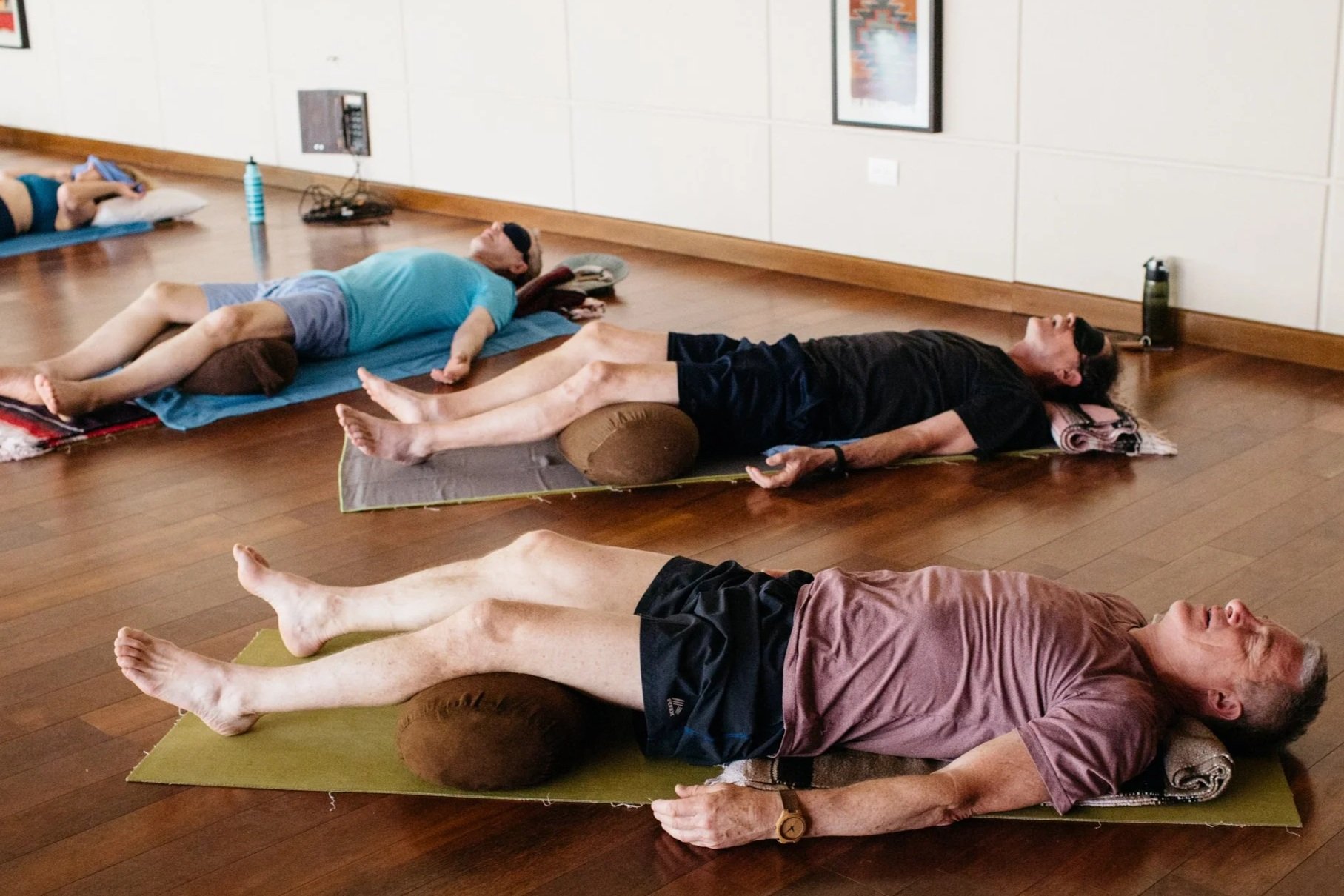
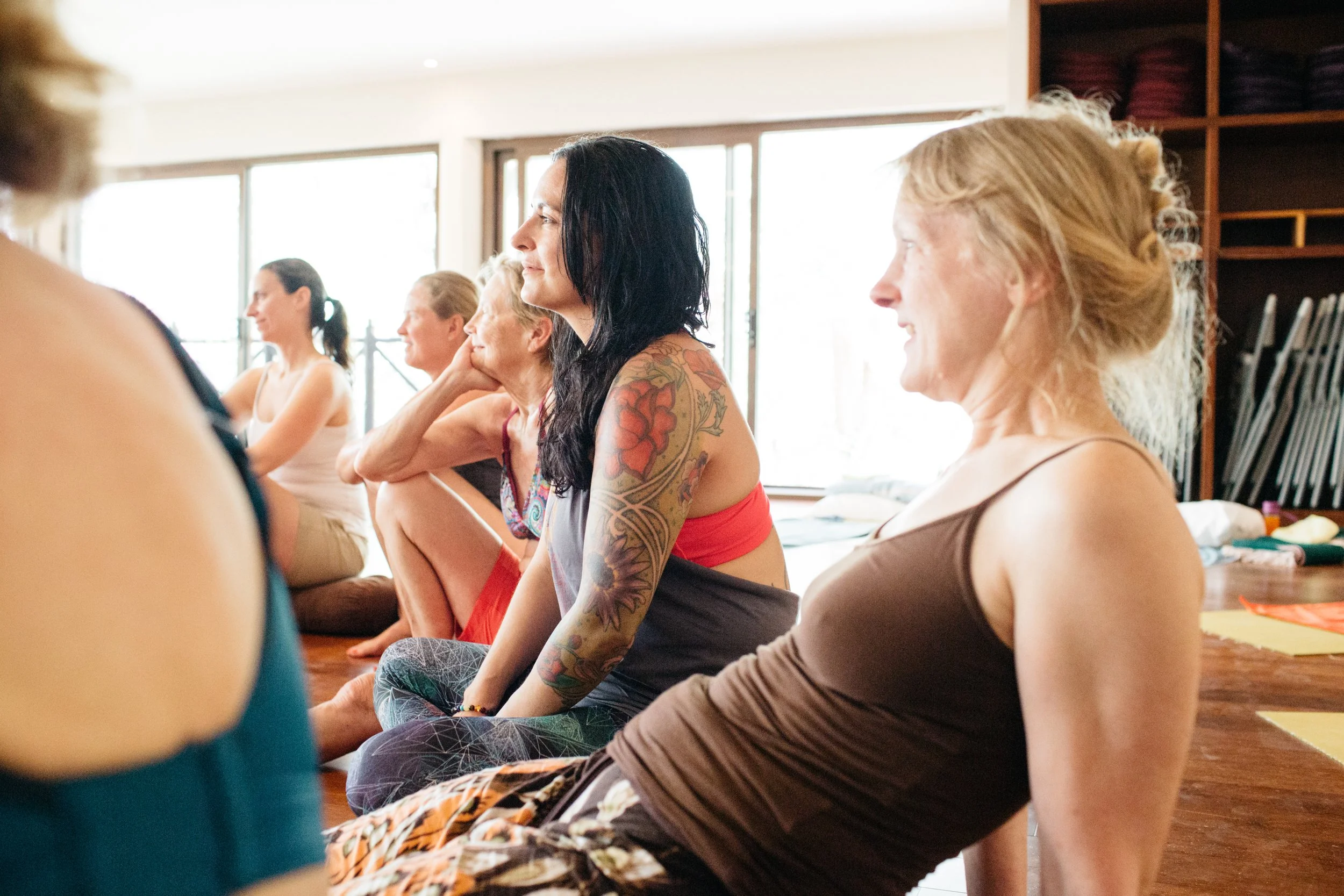

Training Curriculum
-
As a somatic healing modality, breathwork facilitators must have a strong foundation in the science of trauma, how to assess nervous system arousal, and how to offer the safest and most productive experience possible for clients. We will discuss the nature of trauma and how experiences are held and expressed in the body, identifying trauma energy in breathwork and skillful response, and actions for holding the safest container possible. We will also discuss when breathwork is NOT appropriate for some histories and presentation of trauma.
-
This training introduces a range of facilitator tools designed to support clients in deepening their experience from within. You’ll learn how to offer verbal invitations—such as breath retentions, vocal toning, movement, and guided shifts in awareness—that empower the breather to explore their inner terrain in real time. These techniques are subtle yet potent, and can be used in both in-person and online sessions to help move energy, access insight, and open new dimensions of the breathwork journey—all while honoring the client’s pace and agency.
-
You'll learn how to offer verbal cues that gently guide breathers through the unfolding arc of their journey—without overwhelming or interrupting their inner process. We’ll explore what kinds of language best support deepening awareness, how cues can attune to different phases of the session, and how to offer spacious, trauma-informed invitations rather than directives. You'll begin developing a facilitation style that is grounded, responsive, and honors the unique intelligence of each breather’s experience.
-
Breathwork is a powerful form of experiential healing that can open the door to expanded states of consciousness. You’ll explore how to skillfully support others in these states—holding space with presence, attunement, and care as they navigate emotional, energetic, and transpersonal terrain. We’ll examine the full arc of the ceremonial process: preparation, journey, and integration, and discuss how to help clients feel grounded and resourced at every stage. You’ll learn how to curate music that supports deep journeying, recognize common themes and responses that may arise in expanded states, and provide the structure and spaciousness for clients to discover their own meaning, healing, and insight.
-
While each person’s breath reveals the unique imprint of their life story, there are common breathing patterns that frequently arise in sessions—such as breath holding, shallow breathing, or uneven rhythm. In this module, you’ll learn how to recognize these patterns and respond with gentle, informed guidance to support a more open, regulated, and effective experience. We’ll explore how the breath reflects underlying states of being, and how subtle redirection can help unlock deeper access to emotion, energy, and insight—without pushing or overriding the intelligence of the body.
-
You’ll explore how to skillfully adapt your facilitation for a variety of settings, including private sessions, couples and small groups, public ceremonies, and corporate offerings. Guidance is offered for both in-person and online formats, with attention to how the environment and structure shape the experience. The training also welcomes conversation around specific communities or populations you feel called to support, allowing for a personalized and inclusive approach.
-
Facilitating breathwork requires deep care, responsibility, and respect for the vulnerable territory it can open. You’ll examine the ethical considerations of guiding others through experiences that may be physically and psychologically intense. This includes informed consent, understanding scope of practice, and supporting participant safety across a wide range of scenarios. We’ll also explore the subtleties of power dynamics in healing spaces, and what it means to hold this role with humility, integrity, and reverence for the sacredness of the work.
-
The word “breathwork” refers to a wide range of practices—from ancient yogic pranayama to modern therapeutic methods like Buteyko, and more immersive modalities such as Holotropic, Rebirthing, and Kaisora Breathwork. In this training, we’ll explore the historical roots and core differences between these approaches, with attention to how each interacts with the nervous system, consciousness, and physiology.
Rather than promoting a one-size-fits-all model, you’ll gain a nuanced understanding of the breathwork landscape—so you can better educate clients, support informed choices, and offer practices that align with individual needs and outcomes.
-
It’s imperative to understand how altering the breath affects the body, nervous system, and arousal response so that you can guide skillfully and safely. You will learn the anatomy of respiration, the mechanical and chemical mechanisms of breathing, and how altering the breath affects oxygen and carbon dioxide levels, blood pH, and other physiological responses in the body, including the common experience of tetany. This foundation will help you address questions about your clients’ breathwork experience, and help them feel safe and empowered in the breathwork experience.
-
A foundational part of the training is learning how to recognize and respond to signs of regulation and dysregulation in breathwork. You’ll gain a clear understanding of the autonomic nervous system, including patterns of hypo- and hyper-arousal, and how different breathing rhythms can shift these states. This module will support you in cultivating the awareness and skills needed to guide sessions that honor each client’s window of tolerance—ensuring the breathwork journey remains safe, supportive, and oriented toward integration and healing.
Training Format

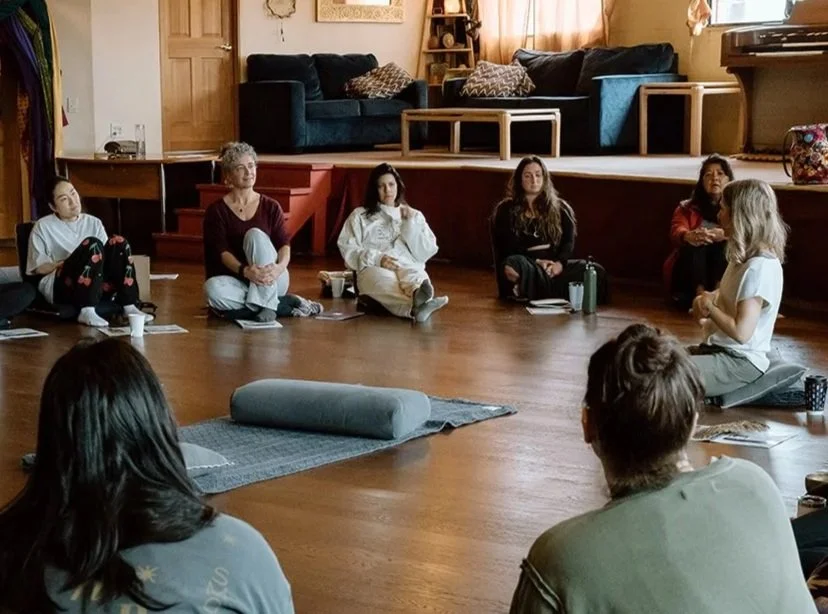
Online
3 days | 9:30am-3:30pm Pacific | 18 contact hours + reading
Our online format offers a flexible and accessible way to begin your facilitator training from anywhere in the world—without sacrificing depth, connection, or intimacy.
Each training includes a dynamic blend of live lectures with visual presentations, group dialogue, and small group or partner breakout sessions for deeper integration and practice.
Participants receive full access to session recordings, allowing you to revisit the material at your own pace and deepen your understanding over time. Our online cohorts are limited to 14 participants, ensuring personalized attention and a strong sense of connection throughout the training.
In-Person
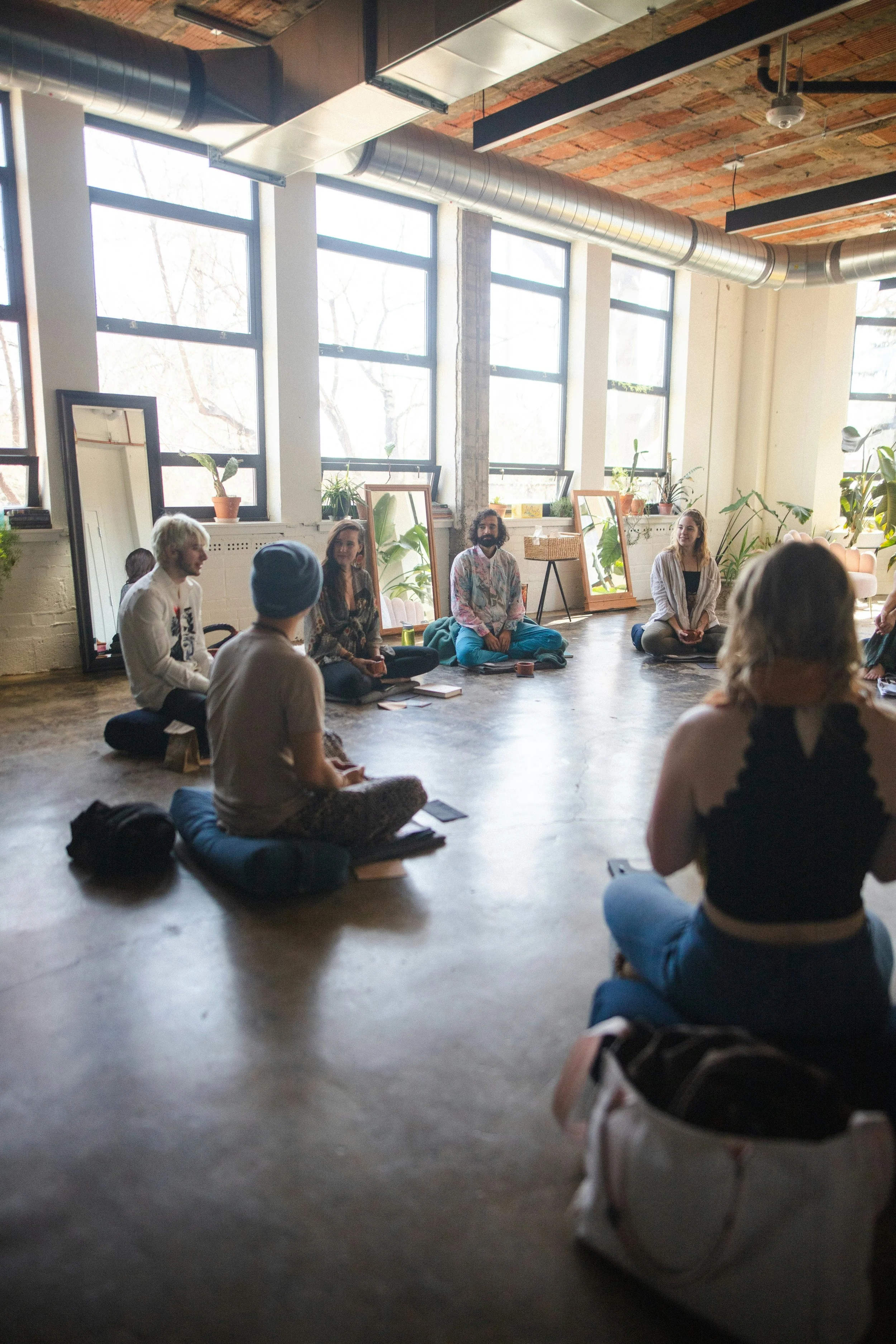
3 days | 10:00am-5:00pm Pacific | 21 contact hours + reading
For those who prefer in-person learning, the Foundations Training is offered as a 3-day program in Seattle.
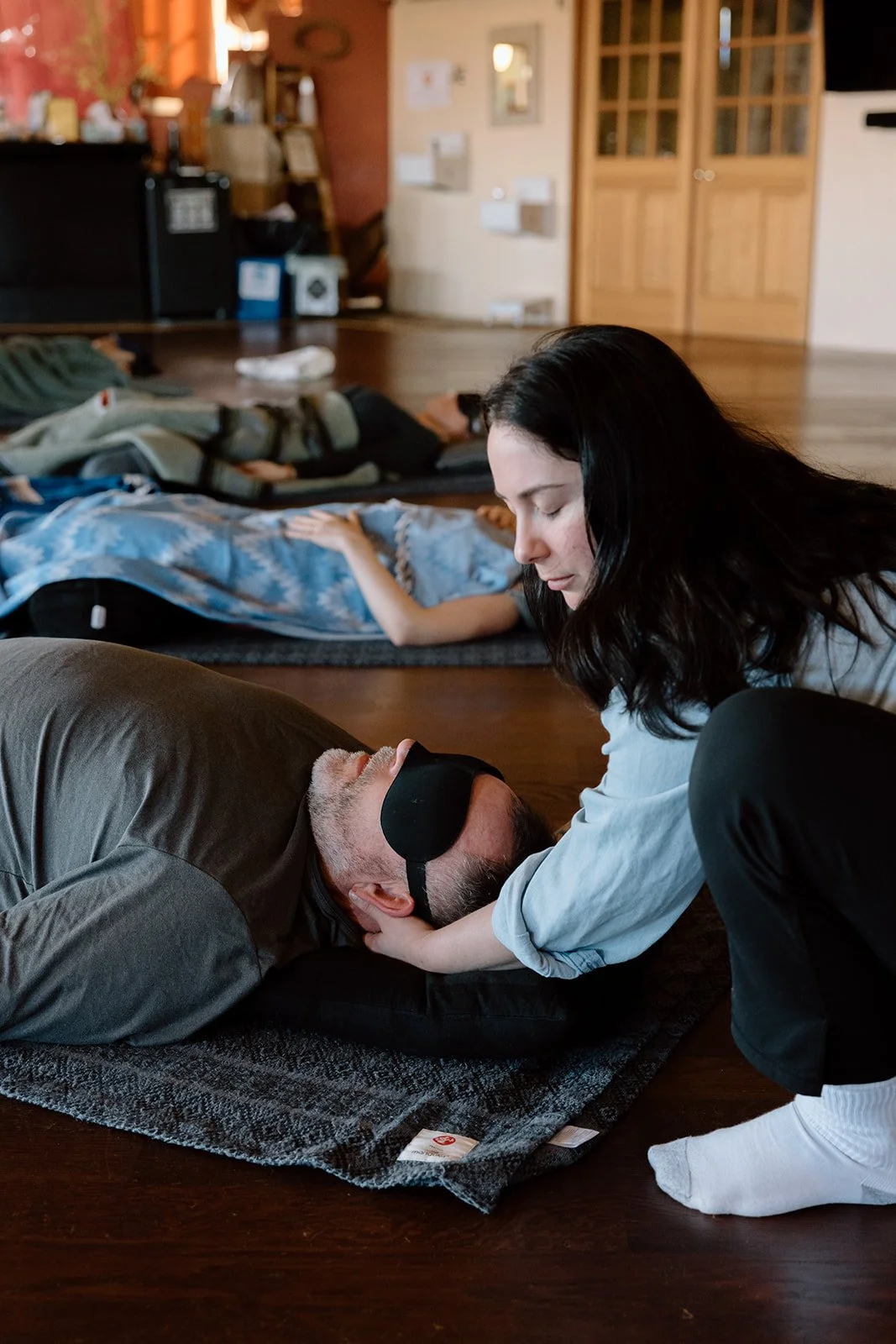
Limited to just 8 participants, this format offers a spacious and relational learning environment, where participants can engage deeply with the material through live teaching, guided ceremony, and meaningful group dialogue. While this format is primarily didactic—with minimal hands-on facilitation practice—it offers a rich opportunity to absorb and integrate the foundational principles of Kaisora Breathwork in a grounded, embodied way.
What’s Included
Participation in the three-day immersive training experience
A comprehensive, 160-page training manual (printed for in-person participants), including foundational theory, facilitation frameworks, and guidance for structuring and introducing breathwork sessions
Access to session recordings for online participants
A certificate of completion
Eligibility to apply for Level Two of the training pathway
Support for continued practice and integration, including:
One month of complimentary access to Kaisora Circle, including live online breathwork sessions and a library of recorded journeys
Soundtracks for your personal breathwork practice

Pre-Requisites & Alignment
Kaisora’s Foundations of Facilitation training is open to anyone who feels called to deepen their understanding of breathwork—whether as a practitioner, facilitator, or personal seeker. While many participants are wellness professionals (therapists, coaches, yoga teachers, bodyworkers, etc.), the training is also suited for those beginning to explore the path of facilitation or seeking to enrich their own healing and spiritual journey.
Before enrolling, we require that you attend several Kaisora Breathwork sessions—ideally with founder and lead trainer Tai Hubbert—to ensure resonance with this particular approach. Experiencing the work firsthand is essential to understanding its depth and alignment with your values.
Level Two (Facilitation Practicum) and Level Three (Mentorship & Supervision) are application-based programs. These advanced trainings are designed for individuals who are psychologically grounded, mature in their own inner work, and ready to hold space for others with skill, integrity, and care.
Kaisora is for those drawn to facilitate breathwork not as a performance or pursuit of peak experiences—but as a sacred and therapeutic practice rooted in safety, presence, and the profound intelligence of the breath itself.

MEET YOUR TRAINER
Tai Hubbert, CHT, E-RYT
Tai Hubbert is the founder of Kaisora Breathwork and the lead trainer of its facilitator certification program. She brings over a decade of full-time private practice and a wealth of experiential knowledge from guiding thousands of sessions across all formats—online and in-person, individual and group, private and corporate. Tai is a Certified Hakomi Therapist (CHT) and Teacher, Experienced Yoga Teacher & Continuing Education Provider (E-RYT/YACEP), and trained in Shamanic Healing through the Foundation for Shamanic Studies. Her teaching is grounded not only in theory, but in the depth of lived experience.
Tai developed the Kaisora Breathwork training over several years as a labor of love and passion, launching the first cohort in 2020. It is the training she wished had existed when she first encountered breathwork: one rooted in the science of the body, developmental psychology, and somatic principles, while also honoring the vast, mystical dimensions of experience. Free of dogma, doctrine, or spiritual ideology, the program invites each participant to discover their own unique medicine and expression as a facilitator.
The Kaisora training community is a humble, sincere, and heart-centered group of individuals dedicated to bringing this work into the world with care and integrity. As a teacher, Tai offers a rare blend of professionalism, humility, warmth, humor, and reverence for the sacred. Her work supports people in reconnecting to the innate wisdom of the body, psyche, and soul—and to the Divine within.
Registration
January 22–24, 2027 | Seattle
In-Person Training | $1,250 USD + tax
May 21-23, 2027 | Seattle
In-Person Training | $1,250 USD + tax
Terms & Cancellation
DEPOSIT: $250 of your registration is a non-refundable deposit to reserve your spot in this limited capacity training.
PAYMENT OPTIONS : The remaining balance is due 30 days prior to the start of the training.
A payment plan is also available, with the balance split over four monthly installments. Payment plans are a commitment to the full tuition. If you choose a payment plan, all scheduled payments remain due regardless of attendance, unless otherwise discussed in advance.
CANCELLATION TERMS: Cancellations made more than 30 days prior to the training are eligible for a refund, less the deposit.
For cancellations within 30 days of the training, no refunds will be issued.
FAQs
-
This training centers on conscious connected breathwork (CCB)—and more specifically, Kaisora’s approach to this modality. While you will not be trained to facilitate full experiential breathwork sessions in Level One, you will develop the foundational knowledge and awareness necessary to eventually guide this work with integrity, safety, and skill.
We also explore the broader “Landscape of Breathwork”, including practices such as pranayama, Buteyko, and Wim Hof, to help contextualize CCB and expand your understanding of how different breathwork modalities serve different needs. While instruction in these other styles is not included, we believe it’s essential for facilitators to have a broad perspective in order to educate and refer clients appropriately.
Your lead trainer, Tai Hubbert, is an experienced yoga teacher with a diverse background in breath-centered practices and spiritual traditions, and weaves this interdisciplinary knowledge into the training for a well-rounded, integrative learning experience.
Before enrolling, we strongly encourage attending a Kaisora Breathwork session with Tai to get a felt sense of the work and determine whether this approach resonates with you.
-
Yes, you are welcome to register for the Level One Foundations of Facilitation to deepen your understanding of breathwork and to enrich your personal practice.
The training focuses heavily on trauma-informed facilitation and holding safer spaces for somatic and expanded state healing work, which translates beautifully to any wellness-oriented professional work.
Psychologists, psychiatrists, social workers, psychedelic-assisted therapists, and others working in the field of mental health and healing are encouraged to take the Level One program to inform your understanding of breathwork and confidence in referring clients to this work.
The Level Two and Three trainings are reserved for those with the intention to facilitate breathwork.
-
Kaisora recommends completing Level Two before facilitating breathwork sessions. This practicum offers the essential hands-on experience, mentorship, and feedback needed to guide a somatic and expanded-state process like breathwork with care, integrity, and skill.
That said, it is ultimately your decision when—and in what context—you begin sharing breathwork. This will depend on your personal and professional background, existing scope of practice, and level of readiness.
Please note: you are not permitted to facilitate sessions under the name “Kaisora Breathwork” until you are certified following completion of Level Three. If you choose to facilitate prior to certification, you are welcome to reference your training experience by stating, for example, “Level One Training with Kaisora Breathwork.”
-
Kaisora welcomes participants who have trained with other schools or facilitators and are seeking to deepen their skills—particularly in areas such as trauma-informed care, personalized mentorship, and integrative facilitation.
However, regardless of prior training or background, completion of Level One is required before advancing to Level Two or Three. This ensures shared language, alignment with the Kaisora approach, and a strong foundation for deeper facilitation work.
-
Yes—with a few steps to support alignment.
You are welcome to register for Level One and begin that process. If you feel called to continue into Level Two, you may submit an inquiry form after registering, and we may schedule a brief conversation to explore your experience, intentions, and readiness for the Facilitation Practicum.
While you can be accepted and reserve a space in Level Two in advance, completion of Level One is required before participating in the training.
-
The online and in-person formats cover the same core curriculum, and both offer a structured and interactive learning environment.
The online format is ideal for those who prefer to join from their home or are traveling from outside the area, and includes access to session recordings so you can revisit the material and integrate the teachings over time.
The in-person format includes a live facilitation demonstration and a partnered facilitator exercise, offering a direct introduction to holding space and supporting someone in a breathwork journey. These elements are introduced in Level One and developed more fully in Level Two.
Both formats are intentionally limited in size to support engagement, connection, and meaningful learning.
Other questions? Contact us here.